Products
Pumps
Pump Systems
Digital Solutions
Shredding Systems
Applications
Environmental Technology
Biogas Handling
Mining and Mineral Processing
Food and Beverage Industry
Oil, Gas and Petrochemicals
Pulp & Paper Industry
Additional Markets
Media
News
Fairs & Events
Downloads
Videos
Knowledge on Demand
SEEPEX Technologies
Security Publications
Services
SEEPEX Care Service Programs
Original Parts
Commissioning
24-Hour Helpline
Technical Basic Pump Training
Services
Company
About SEEPEX
Career
Locations

Separation performance is often discussed through individual outcomes: overflow clarity, underflow density, settling rate, water recovery, or reagent consumption. Each of those indicators matters, but none of them tells the full story on its own. In mining, the more important question is often whether those outcomes remain stable while the plant is operating under changing feed conditions.


A thickener that performs well for a short period but needs constant correction is not truly under control. A clarifier that produces clear water only when operators keep adjusting the dose is still carrying instability. Separation stability is the condition that allows the plant to keep producing predictable results even as ore properties, solids loading, slurry density, and water chemistry change.


That makes separation stability a real mining performance variable. It affects how confidently operators can run the plant, how much reagent is consumed, how predictable downstream handling becomes, and how much manual correction is needed to keep the process within range.

Stability Is More Than a Good Settling Result

A settling test can show whether a flocculant is capable of improving solid-liquid separation under defined conditions. That is useful, but plant operation is much less controlled. Feed streams vary. Water chemistry shifts. Solids loading changes with upstream performance. Residence time, dilution, and feedwell behavior all influence what happens after the reagent is added.

This is why a good laboratory result does not automatically translate into stable plant performance. The plant has to reproduce the separation effect continuously, not just once. That depends on the selected reagent, but also on preparation quality, dosing consistency, dilution, injection location, and the way the process responds to changing conditions.
Why Separation Drifts in Mining Plants

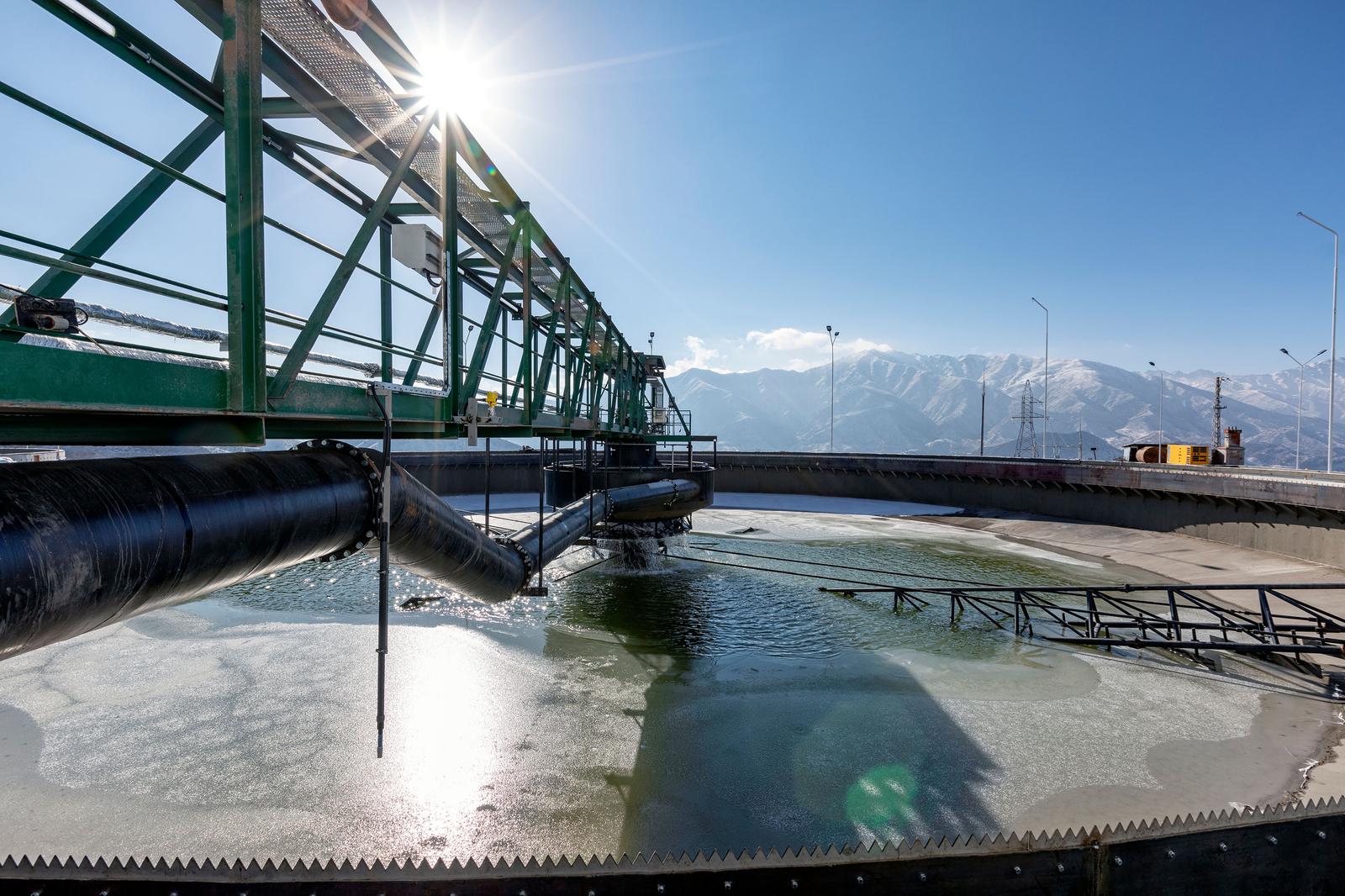
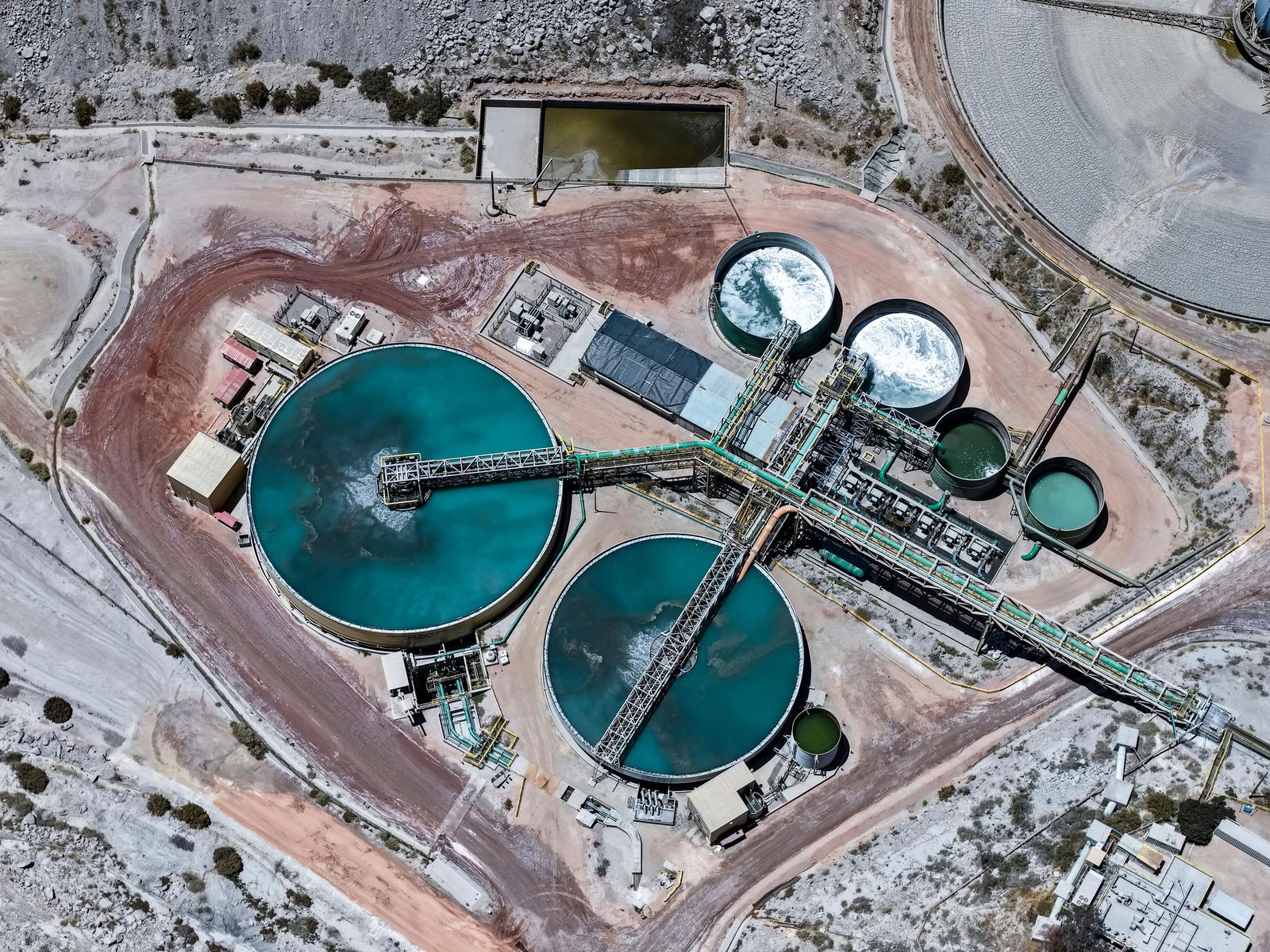
Mining plants rarely operate at one fixed condition for long. Ore variability can change the quantity and behavior of fine particles. Clay content can affect settling response. Recycled water can influence chemistry. Changes in pH, salinity, density, temperature, and feed rate can all shift the way solids respond to flocculant.

The first signs of drift are often subtle. Overflow clarity becomes less consistent. Bed level becomes harder to hold. Underflow density moves outside the expected range. Rake torque may become less predictable. Operators may increase or reduce the dose to recover the process, but if the cause is elsewhere, the adjustment may only move the problem rather than solve it.

In that sense, separation drift is often a system issue. It can come from the chemistry, but it can also come from preparation quality, dilution, feedwell behavior, underflow withdrawal, or poor visibility of what is happening inside the thickener.

The Cost of Unstable Separation

Unstable separation creates costs that are not always obvious at first. More flocculant may be used to recover clarity or settling performance. Operators may spend more time adjusting setpoints. Downstream systems may receive water with more suspended solids than expected. Underflow may become less predictable, affecting pumping, disposal, or further processing.

Over time, instability changes how the plant is operated. Operators build in safety margins. Reagent use creeps upward. Manual intervention becomes normal. The thickener or clarifier may still be functioning, but it is no longer performing with the consistency the process needs.

This is why separation stability should be treated as part of plant performance rather than only as an outcome of reagent dosing. The goal is not only to achieve a target once. It is to hold the process close to that target with fewer corrections.

Stability Depends on the Right Signals

A stable separation process depends on measurement. Operators need to understand not only how much reagent is being added, but how the thickener or clarifier is responding. Useful signals can include overflow clarity, underflow density, bed level, bed mass, rake torque, feed flow, slurry density, and solids loading.

No single measurement explains the full process. Overflow clarity can indicate carryover, but it does not explain bed behavior. Underflow density is important, but it can lag behind process changes. Bed level helps show how the solids inventory is developing, while rake torque can warn of mechanical or rheological stress. Together, these signals help operators understand whether separation is stable or beginning to drift.

A dosing strategy built around process response is stronger than one based only on a fixed chemical feed rate. It allows the plant to respond to real changes rather than relying on reagent addition as the first and only correction.

Dosing Consistency Is Necessary, but Not Sufficient

Consistent dosing is essential, but it is not enough by itself. A plant can deliver the same volume of reagent and still see different separation results if feed conditions change or if the polymer is not prepared and introduced properly. The dose must be consistent, but it must also remain relevant to the actual solids load and process condition.

This is where dosing integrity becomes important. The plant needs to know that the flocculant is prepared correctly, delivered at the intended concentration, and introduced in a way that supports contact with the solids. If the measured dose is correct but the process remains unstable, the issue may be in how the reagent is being used rather than how much is being fed.

Mechanical Handling Still Matters

Even though separation stability is broader than pump selection, mechanical handling remains part of the equation. Flocculants are sensitive reagents, and the way they are pumped, diluted, and introduced can influence their effective performance. If the system creates unnecessary stress or inconsistent delivery, it can add another source of variation to a process that is already dealing with changing feed conditions.

The key point is not that every stability issue is caused by the pump. Many are not. But in a separation process where small changes in reagent condition can affect settling behavior, the dosing system should not add avoidable instability. Gentle, consistent delivery supports the larger goal: keeping the separation process predictable.

From Separation Stability to Process Confidence

The value of stable separation is operational confidence. When overflow clarity, bed behavior, and underflow consistency remain within a predictable range, operators can make better decisions. Reagent addition becomes less reactive. Downstream systems receive more consistent feed. Water recovery becomes easier to manage. The thickener or clarifier becomes less vulnerable to avoidable drift.

This is where separation stability becomes more than an operating preference. It affects reagent cost, water quality, process continuity, and the ability to run the plant closer to its intended performance. A stable process does not remove variability from mining, but it gives the plant a better way to manage it.

What This Means for the Dosing System

A dosing system should be evaluated by more than its ability to move chemical. It should support the stability of the separation process. That means accurate flow, reliable adjustment, proper preparation, suitable dilution, and handling that preserves the reagent’s function before it reaches the process.

When those elements are aligned, the plant is not simply adding flocculant. It is creating more reliable conditions for thickening and clarification. That is the difference between a dosing system that feeds chemistry into the process and one that helps the process stay under control.

Read More About Flocculant Dosing