Products
Pumps
Pump Systems
Digital Solutions
Shredding Systems
Applications
Environmental Technology
Biogas Handling
Mining and Mineral Processing
Food and Beverage Industry
Oil, Gas and Petrochemicals
Pulp & Paper Industry
Additional Markets
Media
News
Fairs & Events
Downloads
Videos
Knowledge on Demand
SEEPEX Technologies
Security Publications
Services
SEEPEX Care Service Programs
Original Parts
Commissioning
24-Hour Helpline
Technical Basic Pump Training
Services
Company
About SEEPEX
Career
Locations

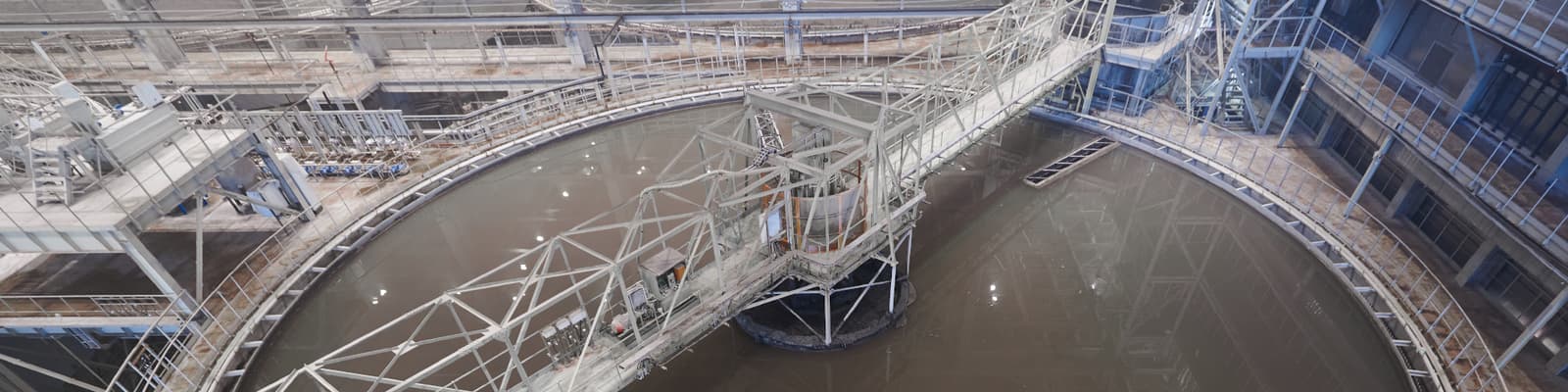
A thickener underflow line rarely becomes restricted without warning. Pressure may rise, delivery may become less consistent, and restarting after a pause may require more effort than normal. If the underlying condition continues, the available flow path can narrow until concentrate no longer moves at the required rate.


Choking is rarely caused by one factor. High solids concentration, yield stress, settling, restricted passages, changing withdrawal conditions, and periods without flow can reinforce one another. The blockage may appear at a bend or connection even though the condition that caused it began elsewhere in the process.

High Solids Reduce the Margin for Change

As the proportion of solids increases, less free water remains between the mineral particles. The particles interact more closely, and the concentrate can become more resistant to starting and sustaining flow.

A relatively small change in solids concentration, particle-size distribution, flocculation, or temperature can then produce a much larger change in underflow behavior.

This explains why a line may operate consistently during one period and begin restricting during the next, even when the equipment settings remain unchanged. The concentrate reaching the transfer system no longer behaves in the same way.

High solids do not automatically create a blockage. Problems develop when the material properties, operating conditions, and available flow path no longer support stable movement.
Yield Stress Makes Restarting More Difficult

Concentrated underflow may require a minimum applied stress before sustained flow begins. This threshold is known as yield stress.

Yield stress becomes particularly important after a pause. While the concentrate is stationary, particles may settle, agglomerate, or form a stronger internal structure. Restarting can then require more pressure than maintaining flow did before the stop.

If the available pressure does not overcome the material’s yield stress throughout the affected section, movement near the pump may not restore flow farther downstream. Some concentrate may move while another section remains stationary.

Adding pressure without locating the restriction can increase loads on the transfer equipment, pipeline, hoses, and connections. It may make the condition more difficult to control without addressing the reason that flow stopped.

Apparent Viscosity Increases Pressure Demand

Once the concentrate is moving, its apparent viscosity influences the pressure needed to maintain flow. Apparent viscosity describes the slurry’s resistance to flow at a specified shear condition.

Thickener underflow is generally non-Newtonian. Its apparent viscosity can change with the applied shear conditions rather than remaining constant. A viscosity measured under one test condition may therefore differ from the apparent viscosity experienced at the inlet or inside the pipeline.

Changes in solids concentration, particle-size distribution, mineralogy, flocculation, temperature, or recent flow history may alter pressure demand even when the pipeline and requested delivery rate remain unchanged.

One viscosity value provides limited guidance unless the measurement conditions represent the concentrate and shear conditions expected in the installation.

Settling Creates Local Restrictions

Particles continue responding to gravity after leaving the thickener. If velocity becomes too low or flow stops, solids may settle in horizontal pipeline sections, low points, bends, suction connections, or other areas where movement is weak.

Settling reduces the open flow area and creates localized zones of higher solids concentration. The remaining passage must carry concentrate through a smaller space, increasing resistance and pressure demand.

Once a deposit begins, further accumulation can progressively narrow the available flow path. The line may continue to pass some material, but stable delivery becomes more difficult to maintain.

Coarse particles, agglomerates, compacted solids, or foreign material may also collect around an existing deposit. The visible obstruction may therefore develop gradually rather than appearing as one immediate blockage.

Restricted Passages Accelerate Buildup

Every change in the flow path affects how concentrated underflow moves. Abrupt reducers, tight bends, undersized connections, partially open valves, damaged hoses, and internal wear can narrow the passage or create areas where solids begin to collect.

A deposit does not need to block the line immediately. It may first reduce the effective diameter, increasing local velocity and pressure demand through the remaining opening. Further settling or material accumulation can then make the restriction progressively more severe.

A recurring blockage at the same location indicates that the underlying conditions require review. Clearing the line restores the flow path temporarily, but it does not correct an unsuitable transition, low-flow area, material change, or damaged component.

Underflow Withdrawal Must Match the Process

Underflow withdrawal must remain aligned with the rate of settling inside the thickener and the requirements of the downstream process.

If withdrawal is too slow, the settled bed may continue to build, and the underflow can become more concentrated. The resulting change in material behavior may increase yield stress, apparent viscosity, and the pressure required for transfer.

If withdrawal is too fast, more water may leave with the underflow, and the solids concentration may fall below the intended level. The thickener may then deliver a less concentrated product to the following process.

Changes in withdrawal also affect movement through the discharge line. Reduced flow may increase settling risk, while a higher requested rate can increase pressure demand. The actual response depends on concentrate behavior, pipeline conditions, and the operating state of the transfer equipment.

Stoppages Allow the Concentrate to Change

A planned pause can become a restriction if the concentrate remains stationary longer than the material and system conditions allow. Settling may continue, the internal particle structure may strengthen, and solids may compact in parts of the line.

There is no universal safe standing time. The acceptable duration depends on solids concentration, particle behavior, temperature, pipeline arrangement, previous shear conditions, and the approved operating procedure.

Restarting against consolidated material by simply increasing pressure may worsen the condition. A line that is not moving should not be assumed to be depressurized.

Before connections are opened or an obstruction is inspected, the system must be isolated and fully depressurized according to the mine’s approved procedures and the equipment manufacturer’s instructions.

Choking Develops Across the Complete Transfer Path

Thickener underflow chokes when the material and transfer system move outside the conditions required for stable flow. High solids concentration can increase yield stress and apparent viscosity. Low velocity and stoppages allow particles to settle. Restricted passages create areas where deposits can form and pressure demand can rise.

The visible blockage may be only the final symptom. Its underlying cause may lie in changing concentrate properties, withdrawal conditions, pipeline geometry, equipment wear, or the length of time the material remained stationary.

Preventing repeated restrictions begins with identifying where concentrate can settle, consolidate, or encounter an unsuitable passage. When material behavior, withdrawal conditions, pipeline layout, and operating history are reviewed together, the cause of choking becomes easier to locate and correct.

Read More About Thickener Underflow Recovery Solutions