Products
Pumps
Pump Systems
Digital Solutions
Shredding Systems
Applications
Environmental Technology
Biogas Handling
Mining and Mineral Processing
Food and Beverage Industry
Oil, Gas and Petrochemicals
Pulp & Paper Industry
Additional Industries
Media
News
Fairs and Events
Downloads
Videos
Knowledge on Demand
SEEPEX Technologies
Security Publications
Services
SEEPEX Care Service Programs
Original Parts
Commissioning
24-Hour Helpline
Services
Company
About SEEPEX
Career
Locations
Build America, Buy America

Flocculant consumption is often viewed first as a cost. In mining, that is understandable. Thickeners and clarifiers can use significant amounts of polymer over time, and reagent spend is easy to track. But consumption alone does not show whether the separation process is performing well.

A plant can reduce flocculant use and lose overflow clarity. It can increase the dose and still see limited improvement. It can also consume more polymer because the system is compensating for poor preparation, unstable feed, weak polymer contact, or damage to the flocculant before it reaches the slurry.


That is why flocculant consumption should always be considered together with thickener performance. The useful question is not only how much polymer is being used. It is what that polymer delivers in return: clearer overflow, stable bed behavior, predictable underflow density, improved water recovery, and fewer process corrections. When consumption and performance are evaluated together, dosing becomes part of separation quality rather than only a reagent-cost issue.

Consumption Is Not the Same as Effective Dose

The amount of flocculant pumped into the process is not always the same as the amount of useful polymer acting on the solids. Polymer can be prepared inconsistently, diluted poorly, introduced at the wrong point, exposed to too much shear, or moved in a way that reduces its ability to form strong flocs. In those cases, the measured dose may look correct while the separation effect is weaker than expected.

This is where consumption can begin to rise. If the thickener does not respond as expected, operators may increase the dose to recover settling or overflow clarity. Sometimes that is necessary. But if the real issue is preparation quality, dilution, injection location, or polymer handling, the higher dose may only compensate for an inefficient system. The plant then pays for more reagent without solving the reason performance became unstable.

Why Comparisons Between Sites Can Be Misleading

Comparing flocculant consumption across mining operations is difficult because the duty can vary widely. A thickener handling fine, clay-rich material behaves differently from one processing coarser mineral solids. Feed flow, solids loading, particle size distribution, mineralogy, water chemistry, pH, and upstream process stability all influence how much flocculant is needed and how well it performs.

That means a lower consumption figure is not automatically better, and a higher figure is not automatically wasteful. A site with difficult fines or variable water chemistry may need more polymer to maintain stable separation. Another site may use less because the material settles more readily, the feedwell conditions are better, or the dosing system preserves the polymer more effectively. The meaningful comparison is polymer use in relation to the quality and stability of the result.

What Thickener Performance Should Be Measured Against

Flocculant consumption becomes meaningful when it is compared with the right performance indicators. In thickening and clarification, those indicators usually include overflow clarity, underflow density, bed level, solids inventory, rake torque, feed rate, feed density, and water recovery. Together, these variables show whether the polymer is helping the process stay stable or whether the plant is simply consuming more chemical without gaining enough control.

A reduction in polymer use only creates value if overflow quality remains acceptable and the bed stays stable. Higher underflow density can be useful, but not if it drives rake torque too high or creates downstream pumping problems. Clearer overflow may be desirable, but not if it requires excessive reagent addition. Thickener performance is a balance, and flocculant consumption should be judged against that balance.

More Flocculant Does Not Always Improve Performance

It is easy to assume that more flocculant will improve settling, but thickening does not work that simply. Additional polymer can improve particle aggregation up to a point. Beyond that point, the benefit may flatten, become inconsistent, or create new operating issues. Overdosing can increase chemical cost, change floc behavior, affect overflow or underflow performance, and make the process appear controlled while the underlying instability remains.

There is also a control problem. If operators rely on more chemical as the main response to every upset, dosing becomes reactive. The thickener may keep running, but the plant loses the opportunity to improve the conditions that caused the instability in the first place. Better preparation, better dilution, stronger measurement, and gentler polymer handling can often reduce unnecessary consumption while improving separation stability.

Where Pump Selection Affects Consumption

A plant may use too much flocculant not because the chemistry is wrong, but because the dosing system is not preserving or delivering it effectively. Polymer-based flocculants are shear sensitive. Their performance depends on the integrity of long molecular chains that help fine particles form larger flocs. If those chains are damaged during transfer or dosing, the plant may need more reagent to achieve the same settling response.

This is why the progressive cavity pump principle is important in flocculant dosing. Fragile flocculants are moved gently through cavities as the rotor turns. The consistent cavity volume supports accurate and repeatable dosing, while the low-shear conveying action helps preserve polymer integrity. Because flow is volumetric, dosing can be controlled by adjusting pump speed, which supports stable delivery without aggressive mechanical handling.

Where SEEPEX Flocculant Pumps Fit

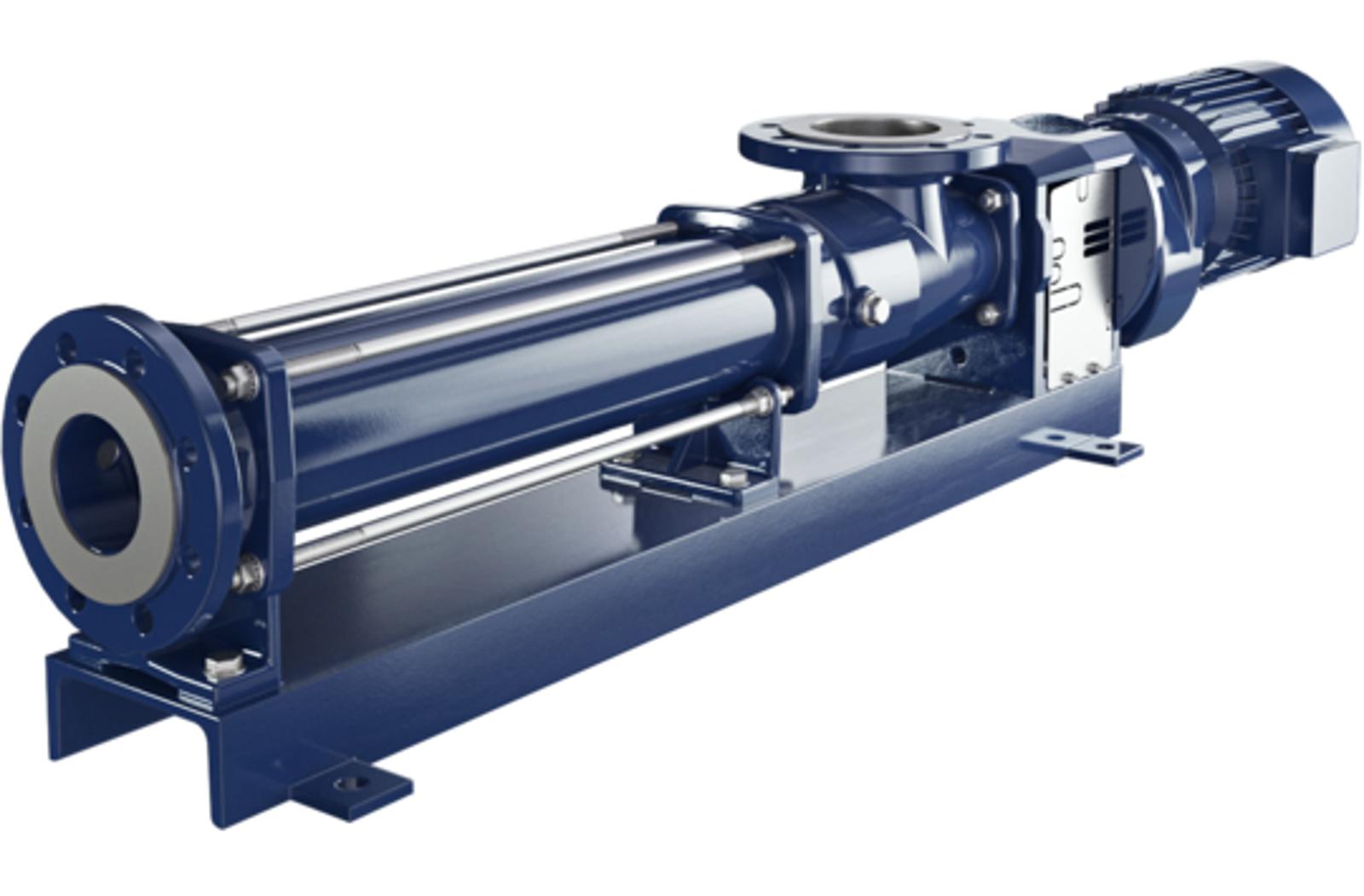
The right SEEPEX pump depends on the dosing demand and the need to protect the flocculant during transfer. For mining operations with higher polymer solution volumes, the SEEPEX N range is the relevant fit. It uses the progressive cavity pump principle, which gently transfers shear-sensitive flocculants through constant cavities as the rotor turns. This supports accurate, repeatable dosing while helping preserve the polymer chains that are needed for effective floc formation.

That matters because flocculant performance depends on dosing integrity, not only dosing volume. The pump should help the polymer arrive in the thickener in a usable condition, rather than degrading the chemistry before it reaches the slurry. With volumetric flow, dosing can also be controlled by adjusting pump speed, giving operators a practical way to match polymer delivery to process demand.

Where availability and service time are important, Smart Conveying Technology (SCT) adds another advantage. SCT supports longer service life of wearing parts and enables faster access to wear components without disconnecting suction or discharge lines. In flocculant dosing, that helps operators keep the dosing system available and consistent over time. Together with SSH, SCT supports the same practical goal: reliable polymer delivery so the thickener receives flocculant consistently and separation remains stable.

The Better Benchmark: Consumption per Stable Result

A more useful way to think about flocculant consumption is not simply polymer use per hour or per ton of solids. Those numbers matter, but they should be connected to the stability of the result. How much flocculant is needed to maintain overflow clarity? How much is needed to hold underflow density without excessive torque? How often does the dose need to be corrected when the feed changes? How much reagent is being used to compensate for avoidable mechanical or control problems?

Once those questions are asked, the comparison becomes clearer. Thickener performance is not improved by using less polymer if the process becomes unstable. It is also not improved by using more polymer if the added reagent does not translate into better separation. The better benchmark is consumption per stable result: the amount of polymer needed to keep the separation process predictable, efficient, and within the operating range the plant depends on.

Stabilize Separation, Not Just Feed Chemicals

Flocculant consumption will always vary because mining duties vary. The more important question is whether the plant is turning the polymer it consumes into stable thickener performance. That depends on chemistry, measurement, preparation, mechanical handling, process response, and the way the flocculant is introduced into the slurry.

A good dosing system helps close the gap between polymer added and polymer performance. It protects the reagent, supports consistent delivery, and gives the thickener or clarifier a better chance to remain stable under changing operating conditions. That is the practical meaning of the application promise: Stabilize separation, not just feed chemicals.

Read More About Flocculant Dosing