Products
Pumps
Pump Systems
Digital Solutions
Shredding Systems
Applications
Environmental Technology
Biogas Handling
Mining and Mineral Processing
Food and Beverage Industry
Oil, Gas and Petrochemicals
Pulp & Paper Industry
Additional Industries
Media
News
Fairs and Events
Downloads
Videos
Knowledge on Demand
SEEPEX Technologies
Security Publications
Services
SEEPEX Care Service Programs
Original Parts
Commissioning
24-Hour Helpline
Services
Company
About SEEPEX
Career
Locations
Build America, Buy America

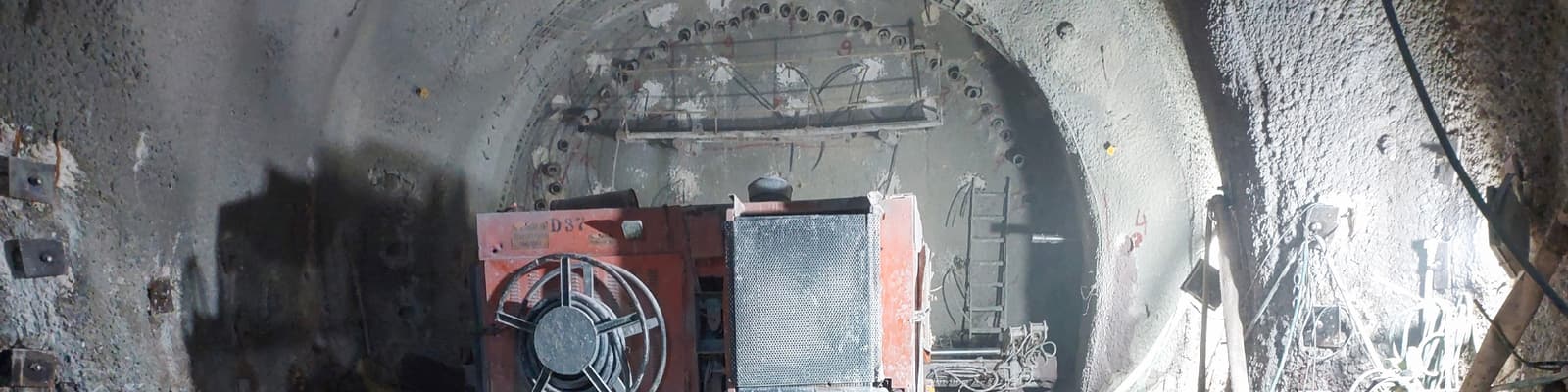
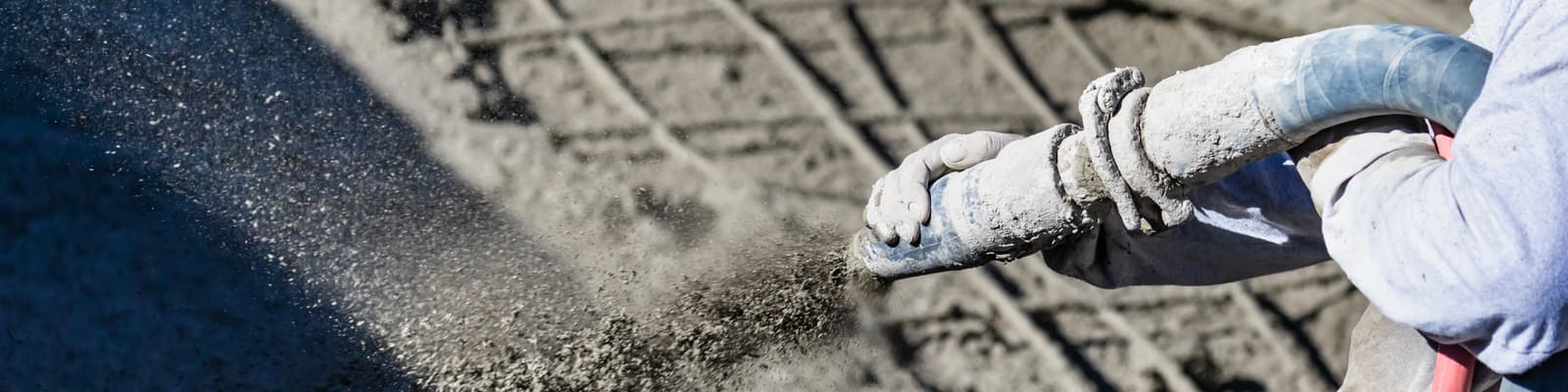
Reliable underground shotcreting depends on more than selecting equipment with sufficient flow and pressure. The pump must handle viscous, abrasive, and often fiber-reinforced wet-mix shotcrete while providing a stable supply to the spraying equipment. It must also fit the installation, operating, cleaning, and maintenance conditions of the mine.


These requirements make pump configuration part of the overall shotcrete practice. A suitable solution supports controlled transfer during application and practical access when pump components require inspection or replacement.


SEEPEX BNM progressive cavity pumps provide a solution for demanding wet-mix shotcrete transfer duties. For underground shotcrete, the technology combines high suction capability, low-shear product handling, uniform flow without pulsing, high-pressure output, accurate dosing, and ease of maintenance. The pump can be configured around the actual mix, pipeline, output, and service requirements.

Match the Pump to the Shotcrete Duty

Wet-mix shotcrete is not a uniform pumping medium. Aggregate grading, maximum particle size, consistency, fiber type, fiber dosage, admixtures, temperature, and time since mixing all influence how the material enters the pump and moves through the system.

The normal operating point matters more than the largest value shown for the product range. Shotcrete behavior can vary between batches, while transfer resistance can change as pipeline sections are added or the material becomes less workable. The pump needs sufficient capability for the approved operating range without depending continuously on maximum pressure or output.

SEEPEX specifies shotcrete pumping solutions with conveying capacities up to 200 cubic meters per hour and pressure capability up to 48 bar, depending on pump selection and application requirements. These are application-range limits, not universal operating points. The final pump configuration must be based on the complete duty.
Use High Suction Capability for Reliable Feeding

Dense shotcrete can be difficult to feed consistently. Fiber content, reduced workability, low hopper level, or unsuitable inlet conditions may prevent the pumping elements from filling completely.

The high suction capability of SEEPEX progressive cavity pumps supports the intake of viscous shotcrete. This is particularly relevant where the material does not flow freely under gravity alone.

Suction performance cannot correct an unsuitable hopper or restricted inlet. The receiving arrangement must still present material consistently to the pump. An adequate fill level, suitable agitation, and an unrestricted connection help maintain stable output.

This interaction between the material supply and the pump is important. Specified pump capacity can only be achieved when the pumping elements receive enough shotcrete to fill correctly.

Maintain Uniform Flow to the Spraying Equipment

The spraying process requires a controlled material supply. Flow variations can complicate nozzle control and make the application sequence less predictable.

Progressive cavity pumps convey shotcrete through cavities that move continuously from suction to discharge. This positive-displacement principle provides uniform flow without pulsing. Delivery can be adjusted through pump speed while the conveying action remains consistent.

SEEPEX progressive cavity technology also supports accurate dosing. The required output still depends on the selected pump, speed, material condition, and complete system duty. The operating principle, however, provides a controlled relationship between pump speed and delivery.

Uniform flow does not replace correct nozzle operation or application control. It provides the spraying equipment with a stable material supply, allowing the downstream process to operate under more predictable conditions.

Limit Unnecessary Stress on the Mix

Fiber-reinforced shotcrete must remain cohesive as it moves from the hopper toward the nozzle. Unnecessary mechanical stress can disturb the distribution of paste, aggregates, and fibers or contribute to segregation.

SEEPEX progressive cavity pumps provide low-shear product handling. Shotcrete moves through the pump without the repeated acceleration and interruption associated with pulsating transfer.

Low-shear pumping cannot correct a poorly formulated or inadequately mixed batch. Mix design, fiber dispersion, transport, accelerator addition, nozzle technique, and application quality remain decisive. The pump’s role is to transfer the prepared shotcrete without introducing unnecessary disturbance.

The complete formulation must therefore be considered during pump selection. Two mixes with similar aggregate sizes may behave differently because of their consistency, paste content, fiber characteristics, or admixtures.

Configure the Pump for Abrasive Service

Aggregates make shotcrete abrasive, and wear must be expected throughout the pumping system. Pump configuration should therefore reflect the material duty, operating hours, pressure, and maintenance strategy. The pump is configured to handle the abrasive characteristics of shotcrete, while inspection and planned component replacement remain part of normal operation.

Wear rates depend on the actual mix and operating conditions. Aggregate characteristics, material velocity, pressure, running time, and equipment condition can all influence component wear. Service expectations should therefore be based on operating experience and inspection rather than a universal replacement interval.

The practical objective is predictable maintenance. Wear should be identified and addressed during planned work rather than after declining performance interrupts shotcreting.

Keep Maintenance Work Underground

Large pumps can be difficult to service where access, lifting space, and working clearance are restricted. Removing connected pipework or dismantling the complete pump can extend maintenance and disturb surrounding equipment.

The SEEPEX BNM pump addresses this challenge through a Maintain in Place design. Rotor Joint Access uses a sliding casing design to provide access for maintenance of the rotor, stator, and mechanical seal. Drive Joint Access allows the entire drive and coupling rod unit to be removed from the rear of the suction casing, providing access to the drive-side joints.

For these defined service activities, connected pipework can remain in place and the complete pump does not need to be dismantled. This provides a practical advantage where the installation includes the required access and removal clearances.

Maintain in Place does not remove maintenance hazards. Isolation, depressurization, verification of zero energy, appropriate lifting equipment, and approved work instructions remain necessary before service begins.

Evaluate the Complete BNM Installation

The final BNM configuration must match the required delivery rate, system pressure, and underground installation conditions. Pump orientation, inlet arrangement, drive, controls, connections, foundation, service space, and lifting provisions all affect operation and maintenance underground. The installation requires sufficient clearance for the sliding casing design, rearward removal of the drive and coupling rod unit, lifting equipment, tools, and service personnel.

Cleaning must also be included in the evaluation. Shotcrete cannot remain stationary indefinitely, so the installation needs an approved method for emptying, cleaning, and preparing the transfer path for restart.

The pump should be assessed as part of the complete operating process. Required output and pressure establish the basic duty. Material behavior, wear, access, cleaning, and maintenance determine whether the selected solution remains practical throughout operation.

Select a Shotcrete Solution for Reliable Service

Good underground shotcrete practice connects pump selection with daily operation and long-term maintenance. The solution must handle the actual mix, provide controlled delivery, operate within the required pressure range, and allow service work under the physical constraints of the mine.

SEEPEX BNM progressive cavity pumps combine high suction capability, low-shear product handling, uniform flow without pulsing, accurate dosing, and Maintain in Place access for defined service tasks. The selected configuration must account for the abrasive characteristics of the shotcrete and the resulting component wear.

When the pump is configured for the actual shotcrete duty and installed with suitable feeding, pipeline, cleaning, and maintenance provisions, it becomes a dependable part of the underground ground-support process.

Read More About Shotcrete Pumping Solutions